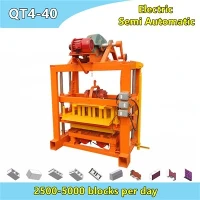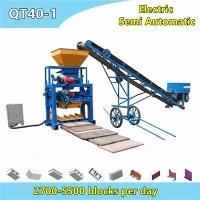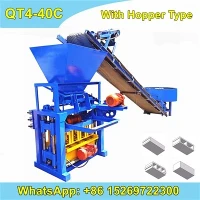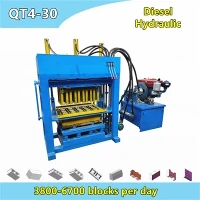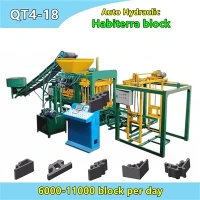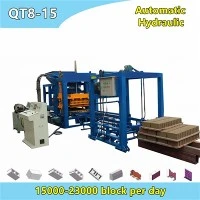


As landscaping, rural development, courtyard improvement, and specialty paving projects continue to grow, clay interlocking bricks are being used in selected applications because of their distinctive connection profiles and flexible paving patterns. To improve production efficiency and dimensional consistency, manufacturers are increasingly turning to clay interlocking brick making machines. These machines do more than simply form green bricks; they also help standardize production and reduce repetitive manual work.
One of the machine's primary functions is controlled material feeding and forming. Clay is first screened, crushed, mixed, and adjusted to the appropriate moisture level. The prepared material is then transferred to the machine hopper and distributed evenly into the forming mold. Consistent feeding helps minimize variations in material distribution and provides a stable foundation for the pressing process.
Compaction and forming are at the heart of the machine's operation. Once the material enters the mold, a mechanical or hydraulic pressing system applies controlled force to compact the clay particles and create the required brick profile. Because interlocking bricks have distinctive connection features, specialized molds are used to form accurate interlocking profiles that meet the requirements of the intended paving application.
Maintaining consistent product dimensions is another important function. Standardized molds and controlled production parameters allow manufacturers to maintain the length, width, thickness, and connection dimensions of the bricks within a relatively consistent range. Compared with manual forming, this can reduce variations and make the products easier to transport, install, and arrange during paving projects.
The equipment also plays an important role in improving production efficiency. By completing material distribution, pressing, and demolding within a controlled production cycle, the machine reduces repetitive manual operations. When combined with conveying and pallet handling systems, it can become part of a more continuous production process suitable for certain levels of batch manufacturing.
Another useful function is product flexibility. By changing the mold, manufacturers can produce interlocking bricks with different dimensions, shapes, and connection profiles. This allows the equipment to support a variety of applications, including garden paths, courtyard paving, landscape areas, and specialty pedestrian surfaces.
Overall, the main functions of a clay interlocking brick making machine include controlled material feeding, compaction and forming, dimensional control, demolding and transfer, and improved production efficiency. With continued advances in mechanization and automated control, this type of equipment can provide a more stable and efficient manufacturing solution for specialty clay interlocking brick production.