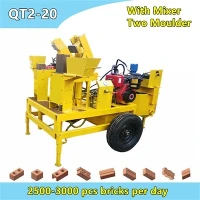


As landscaping, specialty construction, rural development, and paving projects continue to expand, clay interlocking bricks are being used in a variety of applications because of their distinctive profiles and flexible installation patterns. To accommodate different production volumes, product specifications, and automation requirements, clay interlocking brick making machines are available in several configurations. Understanding these categories can help manufacturers select equipment that better matches their production conditions.
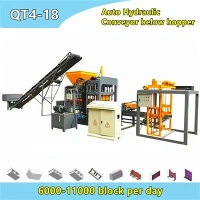
Based on the forming method, clay interlocking brick making machines can generally be categorized as mechanically driven, hydraulically driven, or hybrid forming systems. Mechanically driven machines use mechanical transmission components to perform the pressing cycle and are suitable for certain conventional brick production applications. Hydraulic machines use hydraulic power to control the pressing force and movement, providing controlled forming performance for production environments where stable compaction is important.
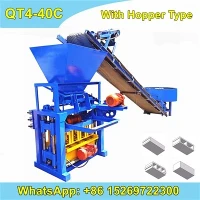
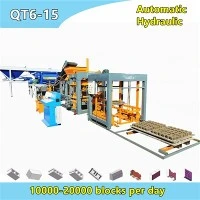
Machines can also be classified according to their level of automation. Semi-automatic systems typically require operators to participate in certain stages, such as material handling, product transfer, or palletizing. They offer relatively flexible configurations and can be suitable for smaller manufacturers or operations that frequently change product specifications. Fully automated systems can integrate material feeding, distribution, pressing, demolding, and conveying, reducing manual intervention and supporting continuous, high-volume production.
Another way to distinguish these machines is by mold flexibility. Single-product machines are primarily designed for a specific size and interlocking profile, allowing manufacturers to focus on a defined product range. Machines that support multiple mold configurations can produce bricks with different dimensions and connection profiles by changing the mold. This provides greater flexibility for manufacturers seeking to expand their product offerings.
Depending on production volume and equipment configuration, manufacturers can also choose between standalone machines and integrated production lines. A standalone machine may be suitable for facilities with limited space or relatively modest output requirements. A complete production line can combine material preparation, conveying, forming, palletizing, and subsequent handling equipment to create a more continuous manufacturing process.
There is no universally superior machine type. Equipment selection should be based on factors such as raw material characteristics, product dimensions, expected output, available factory space, labor requirements, and the desired level of automation.
Overall, clay interlocking brick making machines are available in various configurations to meet different production and application requirements. As brick manufacturing technology continues to move toward greater automation, flexibility, and process control, manufacturers can select an equipment configuration that fits their specific project needs while improving productivity and product consistency.