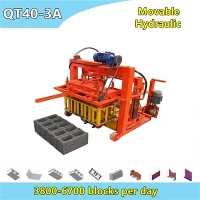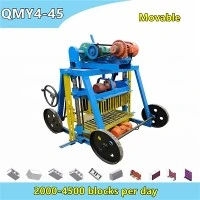


As landscaping, rural development, courtyard paving, and specialty road projects continue to expand, clay interlocking brick making machines are being used in an increasing number of applications. These machines can mechanically handle material feeding, pressing, forming, and demolding, but production performance is influenced by raw material conditions, machine settings, mold quality, and routine maintenance. Proper operation and equipment management are therefore essential for reliable production.
Before operating the machine, its installation condition should be carefully inspected. The equipment should be placed on a level and stable foundation with sufficient load-bearing capacity, while adequate space should be provided for operation and maintenance. Before startup, operators should check the frame, molds, drive components, fasteners, and electrical connections. The machine should only be commissioned after confirming that there are no obvious abnormalities.
Raw material preparation is another important consideration. Clay particle composition, moisture content, and plasticity can significantly affect the forming process. Before production, the material should be screened, crushed, and properly mixed, with moisture adjusted according to the product requirements. Material that is too dry may be difficult to compact, while excessive moisture can reduce the stability of freshly formed bricks. The material condition should therefore be monitored throughout production.
During operation, feeding, pressing, and demolding parameters should be set according to the manufacturer's instructions. The mold must be suitable for the specific interlocking brick design, and production should not be attempted with an incompatible mold. If the finished bricks show deformation, incomplete interlocking profiles, or noticeable dimensional changes, the material condition and forming parameters should be checked promptly.
Mold condition has a direct influence on forming quality. Molds should be inspected regularly for excessive wear, deformation, or cracks, and residual clay should be removed from the mold cavities. After production, the hopper, molds, feeding mechanism, and accessible machine surfaces should be cleaned to prevent dried material from affecting subsequent production cycles.
Routine maintenance is equally important. Bearings, drive components, hydraulic systems, and electrical components should be inspected according to the manufacturer's maintenance requirements. Designated lubrication points should also be serviced at appropriate intervals. If unusual noise, excessive vibration, hydraulic leakage, or unstable machine movements occur, the equipment should be stopped and inspected.
Safety procedures should be followed throughout the entire production process. Operators should receive appropriate training and should never remove protective devices or perform maintenance while the machine is running. Cleaning, inspection, and repair work should only begin after the equipment has been stopped and the necessary safety measures have been implemented.
Overall, safe and effective operation of a clay interlocking brick making machine requires attention to installation, raw material preparation, process settings, mold management, routine maintenance, and workplace safety. Establishing standardized operating procedures can help reduce equipment failures and product variations while providing more reliable support for the production of clay interlocking bricks.