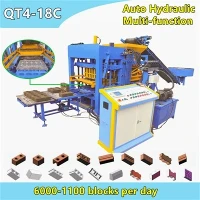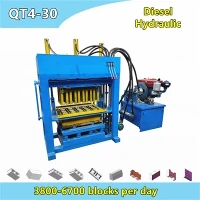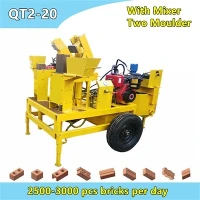


As landscaping, courtyard paving, rural development, and specialty road projects continue to expand, clay interlocking bricks are being used in selected applications because of their distinctive profiles and flexible installation patterns. The shape of a clay interlocking brick making machine is reflected in its overall equipment layout, forming mold, and the final profile of the bricks it produces. Careful shape and mold design can influence not only appearance but also forming performance, demolding, and installation.
The overall structure of a clay interlocking brick making machine is generally built around a stable frame that accommodates the feeding system, pressing mechanism, molds, and demolding components. The external configuration varies depending on the forming method, required pressing force, and level of automation. Some machines use a vertical arrangement in which material enters the forming area from above, while others feature a more compact modular layout that can be integrated into production lines with different space requirements.
The forming mold has a much more direct influence on the final shape of the clay interlocking brick. Interlocking bricks may feature recessed and raised edges, curved profiles, toothed connections, or other specialized joining structures. The mold cavity is manufactured according to the desired product design so that the clay mixture can form the required connection features during pressing. Interchangeable molds can also allow manufacturers to produce bricks with different dimensions, thicknesses, and profiles.
Common clay interlocking brick designs include rectangular, wavy, curved, and specially interlocking profiles. Different shapes can create different visual patterns after installation. Regular rectangular bricks are generally suitable for orderly arrangements, while bricks with curved or interlocking edges can create more flexible paving patterns.
The shape of the brick must also be compatible with the manufacturing process. Highly complex profiles may make mold fabrication and demolding more difficult. Product designers therefore need to balance appearance, connection performance, and the forming capabilities of the equipment. Mold precision, pressing parameters, and raw material consistency can all influence the definition and accuracy of the finished brick's edges.
Different applications may also require different brick profiles. Courtyards and landscape projects may place greater emphasis on appearance and paving patterns, while roads and public spaces may require greater consideration of dimensional consistency, structural stability, and ease of installation. Manufacturers should therefore select appropriate brick designs and molds according to the requirements of each project.
Overall, the external shape of a clay interlocking brick making machine varies according to its structural configuration and production setup, while the mold directly determines the profile and connection pattern of the finished brick. Through appropriate mold engineering and forming processes, manufacturers can produce a wider variety of clay interlocking bricks for different paving applications.