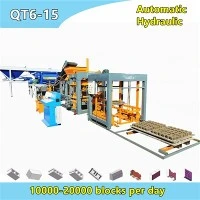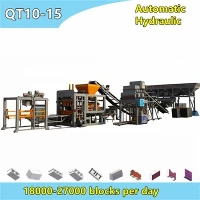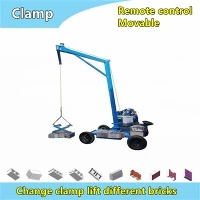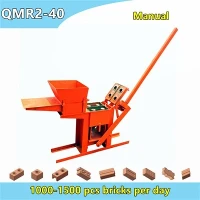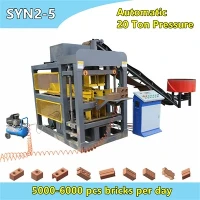


As construction, road development, and infrastructure projects continue to expand, flexible and on-site approaches to building material production are attracting increasing attention. A mobile concrete non-fired brick making machine is designed to produce concrete bricks and blocks without the high-temperature firing process traditionally used for some masonry products. Its mobile configuration allows the equipment to be relocated according to project requirements, making it suitable for selected construction environments where flexible production is important.
The production process begins with raw material preparation. Cement, sand, aggregates, fly ash, or other suitable materials are proportioned according to the requirements of the finished product, followed by the addition of a controlled amount of water. The ingredients are thoroughly mixed to create a concrete mixture with suitable workability. Material proportions and moisture content can have a significant effect on forming performance, so they should be adjusted according to the product specifications and characteristics of the available materials.
After mixing, the concrete mixture is transferred into the machine hopper through a feeding system. A distribution mechanism then fills the forming mold with the material. Because the machine relies on mold-based forming, the dimensions and configuration of the mold directly determine the shape and size of the finished product. Uniform filling helps prevent areas of insufficient or excessive material and provides more stable conditions for compaction.
During the forming stage, the pressing mechanism applies controlled force to the material inside the mold. The aggregates and cement-based mixture are compacted to form a newly molded brick or block with sufficient green strength for handling. Some machines may also incorporate vibration during forming to improve material distribution and compaction within the mold, helping achieve more consistent shape and density.
Once pressing is complete, the machine carries out the demolding process. The newly formed products are released from the mold and placed on pallets or in a designated handling area. They then undergo natural curing or another appropriate curing process to develop the required performance. Unlike conventional fired bricks, non-fired concrete products do not require kiln firing, so the manufacturing process focuses primarily on material preparation, mechanical forming, and subsequent curing.
Mobility is one of the machine's defining characteristics. The equipment can be relocated according to site conditions and, where suitable raw materials and operating conditions are available, can reduce the need to transport finished bricks over long distances. This configuration may be particularly useful for selected temporary projects, construction sites, and operations that require production locations to be changed.
Overall, a mobile concrete non-fired brick making machine typically completes production through material proportioning, mixing, feeding, controlled distribution, pressing, demolding, and curing. By combining a mobile configuration with mechanized forming technology, it provides a flexible option for on-site brick production in suitable construction applications.