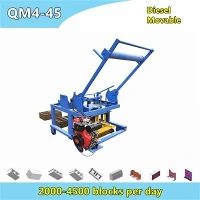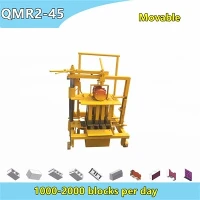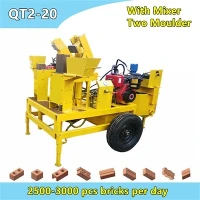


As construction, road development, rural improvement, and infrastructure projects continue to expand, greater flexibility is often required when supplying building materials. A mobile concrete non-fired brick making machine combines a concrete forming system with a relocatable equipment design, allowing production to take place at suitable sites. Compared with conventional stationary production, its main advantage is the ability to adjust the production location according to project conditions.
Construction sites are one of the most typical application environments for mobile concrete non-fired brick making machines. For projects with extended construction schedules and substantial requirements for bricks or blocks, a dedicated production area can be established when cement, aggregates, water, and other necessary materials are available. Producing bricks on-site or nearby can reduce some transportation requirements and make it easier to coordinate material supply with construction progress.
Road and municipal construction projects can also benefit from this type of equipment in suitable circumstances. Certain road-related works, public facilities, and supporting infrastructure projects may require a concentrated supply of concrete bricks or blocks. A mobile machine can be relocated according to different construction stages, providing production support closer to the area where materials are needed. The appropriate product type should be selected according to engineering specifications and required performance.
Rural development and village infrastructure projects are another potential application. Construction sites in rural areas can be widely dispersed, and fixed production facilities may be located some distance from the project. Where raw materials, site conditions, and construction management allow, a mobile non-fired brick making machine can provide a nearby production option for roads, courtyards, public areas, and selected building-related projects.
Temporary and phased construction projects may also be suitable for mobile equipment. When a project has a defined production period, requires operations to move between different areas, or has limited access to permanent factory facilities, a mobile machine can be relocated as the work progresses. This can provide greater flexibility in equipment deployment.
In regions where conventional building material supply is limited, mobile brick making equipment may also provide logistical advantages by using suitable locally available raw materials. Before deployment, however, project managers should evaluate ground conditions, power and water availability, raw material supply, transportation requirements, and workplace safety provisions.
It is important to note that a mobile concrete non-fired brick making machine is not suitable for every construction environment. Product performance depends on factors such as material proportions, moisture content, compaction pressure, mold configuration, and curing conditions. Production should therefore comply with applicable project requirements and the equipment manufacturer's operating guidelines.
Overall, mobile concrete non-fired brick making machines may be used at selected construction sites, road and municipal projects, rural development sites, temporary projects, and locations where transporting finished bricks over long distances is inconvenient. By allowing the production location to be adjusted, this type of equipment can provide a more flexible brick manufacturing solution for suitable projects.