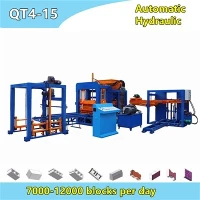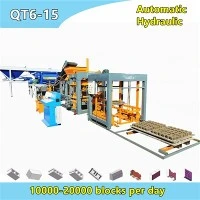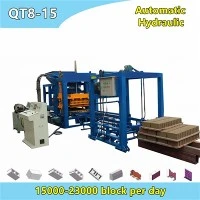


As construction, road development, landscaping, and infrastructure projects continue to expand, brick making equipment is becoming available in an increasingly wide range of configurations. For manufacturers and equipment buyers, a well-structured brick making machine product catalog is more than a collection of product information. It is a practical reference for comparing machine models, evaluating production requirements, and selecting suitable equipment and supporting systems. A professionally prepared catalog can organize complex technical information in a clear format and help customers understand the capabilities and applications of different machines.
A brick making machine catalog typically begins with an overview of the available equipment categories. Depending on the forming method, automation level, production capacity, and intended product, the catalog may include concrete brick making machines, non-fired brick machines, block making machines, interlocking brick machines, and customized forming equipment. Clear product classification allows customers to quickly identify machines that match their manufacturing requirements.
Machine construction and operating functions are also important sections of a product catalog. Information may cover the main frame, material feeding system, forming assembly, molds, demolding mechanism, hydraulic or mechanical drive components, and electrical control system. This helps customers understand how the equipment performs key production stages such as material feeding, distribution, compaction, forming, and demolding. Where different automation configurations are available, the catalog can also describe optional conveying and pallet handling systems.

Technical specifications are among the most important details for equipment comparison. A catalog may present production capacity, compatible brick types, mold dimensions, machine size, power configuration, and other relevant specifications for each model. However, actual output and product performance can vary depending on raw material proportions, product dimensions, operating practices, and production conditions. Technical data should therefore be evaluated in the context of the intended application.
Modern brick making machine catalogs can also present complete production line solutions rather than focusing only on individual machines. These solutions may cover material preparation, mixing, conveying, automatic distribution, pressing, forming, demolding, and pallet handling. Presenting the relationship between individual machines helps customers understand how a complete manufacturing system can be configured and is particularly useful for companies planning to expand production capacity.
Additional information can further improve the practical value of a catalog. Sections covering application examples, mold options, maintenance recommendations, and after-sales support can give customers a more complete understanding of the equipment. Product photographs, process illustrations, and finished brick images can also make technical information easier to understand and allow readers to identify key features more quickly.
Overall, a brick making machine product catalog serves not only as a product presentation document but also as an important communication tool between equipment manufacturers and prospective buyers. By clearly presenting machine types, structural features, functions, specifications, and production solutions, a well-designed catalog can make equipment selection more efficient and provide useful guidance for planning future brick manufacturing projects.