

As construction, road development, rural improvement, and infrastructure projects continue to expand, greater flexibility is often required when producing and supplying masonry materials. Mobile concrete non-fired brick making machines combine relocatable equipment designs with mechanized forming technology, making them suitable for selected on-site production applications. Depending on the drive system, automation level, production capacity, and structural configuration, these machines can be divided into several categories to meet different project requirements.
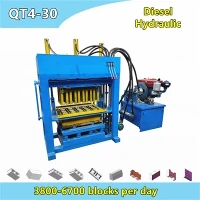
Based on the forming drive system, mobile concrete non-fired brick making machines can generally be categorized as mechanically driven, hydraulically driven, or vibration-assisted forming machines. Mechanical models rely primarily on mechanical transmission components to complete pressing and related movements and can be suitable for certain conventional brick production applications. Hydraulic machines use hydraulic power to provide forming force and allow controlled operation of the pressing cycle, making them suitable for production environments where consistent compaction is important. Vibration-assisted machines combine vibration with pressing to improve material distribution and compaction inside the mold.

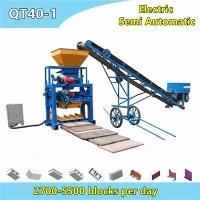
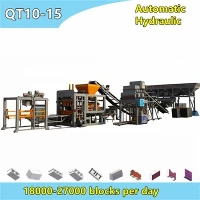
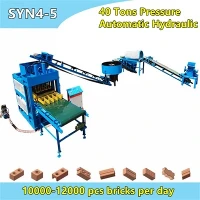
Another classification is based on the level of automation. Semi-automatic machines typically require operators to participate in certain tasks, such as material handling, product transfer, or palletizing. Their relatively flexible configuration can be useful for projects with moderate output requirements or frequently changing product specifications. More highly automated systems can integrate material distribution, pressing, demolding, and conveying, reducing manual intervention and supporting a more continuous production process.
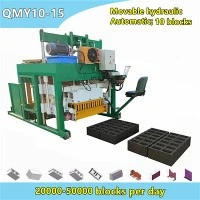
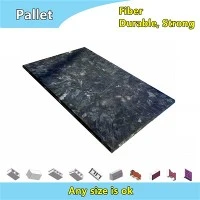
Machines can also be classified according to production capacity. Compact mobile units generally require less space and can be easier to relocate, making them suitable for construction sites with limited working areas. Medium- and high-capacity mobile systems are designed for larger production requirements and can be integrated with mixers, conveyors, and pallet handling equipment to create a more complete on-site manufacturing setup.
Mold flexibility provides another useful distinction. Single-product machines are designed primarily for a specific brick or block size, allowing the production process to remain focused on one product specification. Machines that support multiple mold configurations can produce different sizes and profiles by changing the mold, giving manufacturers greater flexibility when project requirements vary.

Mobile equipment can also differ in its relocation design. Some machines use wheel-based configurations, while others incorporate structural features intended to simplify transportation and repositioning. When selecting equipment, manufacturers and project managers should consider site conditions, expected output, product specifications, raw material availability, power requirements, and the desired level of automation.
Overall, mobile concrete non-fired brick making machines are available in a range of configurations, each suited to different production conditions. Equipment selection should be based on actual project requirements rather than relying solely on machine size or automation level. Properly matching the machine type to the working environment can help improve production stability, equipment utilization, and overall efficiency.