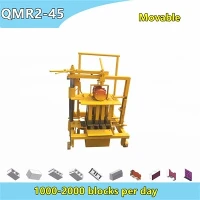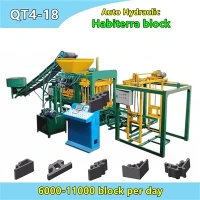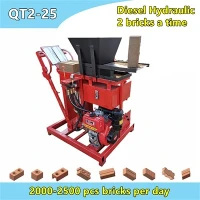


As construction, road development, rural improvement, and infrastructure projects continue to expand, greater flexibility is often needed when supplying building materials. Conventional brick production is generally carried out at fixed manufacturing facilities, with finished products transported to construction sites. A mobile concrete non-fired brick making machine offers a different approach by allowing concrete bricks and blocks to be formed at suitable job sites or nearby production areas, providing greater flexibility for selected construction projects.
A mobile concrete non-fired brick making machine can be defined as movable equipment that uses cement, aggregates, fly ash, and other suitable materials to manufacture concrete bricks, blocks, and similar products through processes such as proportioning, mixing, material distribution, pressing, forming, and demolding. The term "non-fired" means that the finished products do not require the high-temperature kiln firing traditionally associated with fired clay bricks. Instead, the newly formed products develop their required properties through an appropriate curing process.
The primary distinction between a mobile and stationary brick making machine is the ability to relocate the equipment according to production conditions. Mobile systems are generally designed for easier transportation and deployment. When suitable ground conditions, load-bearing capacity, operating space, and safety provisions are available, the machine can be positioned according to project schedules and the location of raw materials. For certain construction projects, this approach can reduce the need to transport finished bricks over long distances.
The production process begins with the proportioning of cement, aggregates, and other raw materials. These ingredients are mixed thoroughly to create a uniform concrete mixture. The material is then transferred to the machine hopper, where a feeding mechanism distributes it into the forming mold. A controlled pressing system applies force to compact the mixture and create bricks or blocks with the required dimensions and profile. After forming, the products are released from the mold and transferred to the subsequent curing stage.
A mobile concrete non-fired brick making machine can support different product specifications through the use of compatible molds. This gives manufacturers a degree of flexibility when producing different types of concrete masonry products. However, the final performance of the products depends on several factors, including raw material quality, mix proportions, moisture content, compaction pressure, mold condition, and curing conditions. The machine configuration alone does not determine the quality of the finished products.
Overall, a mobile concrete non-fired brick making machine can be understood as a mechanized forming system that combines concrete brick production with a relocatable equipment design. Its primary value lies in flexible deployment and the potential to reduce dependence on fixed production facilities and long-distance transportation for suitable projects, providing a practical alternative for construction sites where on-site or nearby brick production is feasible.