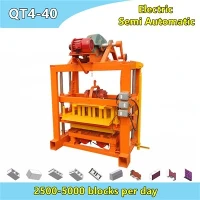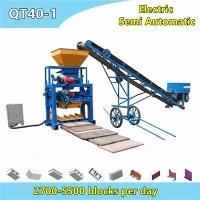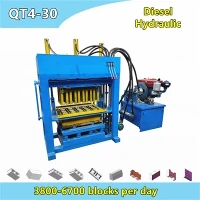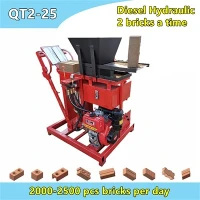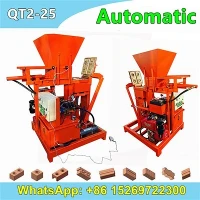


As demand for clay interlocking bricks continues to grow in landscaping, rural development, specialty construction, and paving projects, the structural design of brick making equipment has become an important consideration for manufacturers. A clay interlocking brick making machine typically completes production through material feeding, compaction, forming, and demolding. Its structural configuration must balance forming accuracy, operating stability, and production efficiency to support reliable manufacturing.
The machine frame is one of the main load-bearing components. It supports the forming mechanism, feeding system, drive components, and other functional assemblies. A rigid and stable frame helps minimize unwanted movement during operation and provides a solid foundation for the pressing and forming process. Fasteners and structural connections should also be inspected regularly during long-term use.
The material feeding system is another important part of the machine. It generally consists of a hopper, distribution mechanism, and related drive components. Its primary function is to transfer the prepared clay mixture into the mold and distribute it as evenly as possible. A well-designed feeding system helps reduce areas of insufficient or excessive material and supports more consistent brick density and dimensions.
The forming assembly is the core structure of the machine and typically includes the mold, pressing head, and drive mechanism. Because clay interlocking bricks have distinctive connection profiles, the mold must be manufactured according to the specific dimensions and geometry of the product. A properly matched mold helps create well-defined interlocking features while also supporting smooth demolding.
The drive system is essential for stable equipment operation. Depending on the machine design, mechanical, hydraulic, or other drive technologies may be used to power pressing, feeding, and demolding movements. Properly configured drive components allow these actions to work together according to the programmed production cycle and can help reduce unnecessary impact and instability.
The demolding mechanism removes the newly formed brick from the mold after pressing. A controlled demolding action helps reduce deformation or damage and supports the integrity of the interlocking profile. Some machines can also be connected to conveying equipment to transfer the formed bricks to subsequent processing areas.
Modern equipment may additionally incorporate an electrical control system to coordinate feeding, pressing, and demolding. Sensors, control components, and operator interfaces can make machine operation more convenient while helping maintain consistent production cycles.
Overall, a clay interlocking brick making machine generally consists of a supporting frame, feeding system, forming assembly, drive system, demolding mechanism, and control system. These components work together to complete the brick forming process. As equipment technology continues to advance, structural design is expected to place greater emphasis on stability, automation, and mold flexibility, providing more reliable support for clay interlocking brick manufacturing.