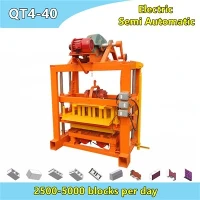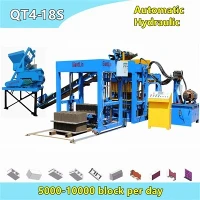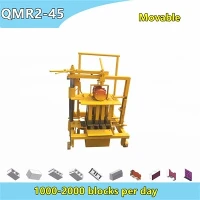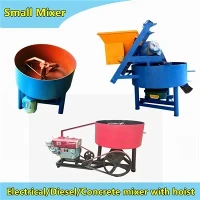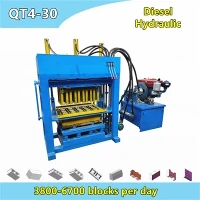


As demand for specialty paving materials continues to grow in construction, landscaping, and selected road projects, clay interlocking bricks are attracting attention for their distinctive profiles and flexible installation characteristics. A clay interlocking brick making machine is designed to manufacture these products through a mechanized process that typically includes material feeding, pressing, forming, and demolding. This approach can improve production efficiency while supporting more consistent product dimensions.
One of the defining features of this type of machine is its mold-based forming capability. Interlocking bricks have specially designed edges and connection profiles, so the forming mold must accurately match the required product design. By changing the mold, manufacturers can produce bricks with different lengths, widths, thicknesses, and interlocking configurations, allowing the equipment to accommodate a broader range of product and project requirements.
Stable pressing performance is another important characteristic. During production, prepared clay material is fed into the mold, where the pressing system applies controlled force to compact the material and form a solid green brick. Appropriate forming pressure helps maintain dimensional consistency and ensures that the interlocking profile is clearly defined.
The feeding system also plays an important role in production quality. Uniform material distribution within the mold helps reduce areas with insufficient or excessive material, supporting more consistent brick formation. In continuous production, a stable feeding cycle can also contribute to more predictable production times and smoother equipment operation.
Automation is another area of development for modern brick making equipment. Depending on the configuration, a clay interlocking brick making machine can incorporate automated feeding, material distribution, forming, demolding, and conveying functions. An integrated control system can coordinate these stages, reducing repetitive manual work and supporting more continuous production.
The characteristics of the raw material must also be considered during operation. Clay particle size, moisture content, plasticity, and mixing uniformity can all affect forming performance. Production parameters should therefore be adjusted according to the actual material condition and the specifications of the finished brick.
Overall, clay interlocking brick making machines are characterized by flexible mold configurations, stable pressing performance, controlled material feeding, and strong potential for automation. As forming and control technologies continue to advance, this type of equipment can provide manufacturers with a more flexible and efficient mechanized solution for producing specialty clay interlocking bricks.