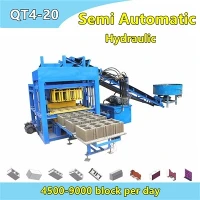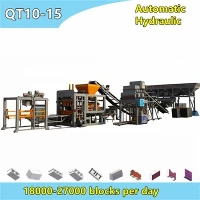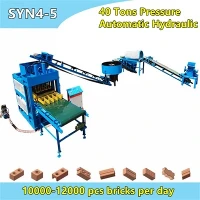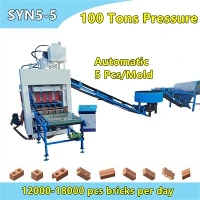


As concrete product manufacturing becomes increasingly mechanized and automated, manufacturers are paying greater attention to the operating performance of concrete block making machines. Performance testing helps determine whether equipment is functioning properly, identify potential problems, and provide useful information for commissioning, maintenance, and stable production. A structured testing process is particularly valuable when new equipment is installed or machines have been operating for an extended period.
Operating stability is an important part of performance evaluation. During testing, the machine should be observed during startup, continuous operation, and shutdown to determine whether each stage runs smoothly. Unusual noise, excessive vibration, or irregular movement may indicate problems that require further inspection. The frame, drive components, and vibration system should remain stable during operation, as loose connections or component problems can affect production performance.
Forming performance is one of the most important aspects of testing a concrete block making machine. Trial production can be used to evaluate whether materials are distributed evenly, whether vibration and compaction work in coordination, and whether demolding is smooth. The dimensions, shape, and surface condition of the resulting blocks should also be checked. Significant variations between production batches may require further investigation of the molds, material consistency, or forming parameters.
Production efficiency is another useful performance indicator. Manufacturers can record the forming cycle time, continuous operating stability, and output over a defined period based on the machine's intended operating conditions. Testing should not focus only on the highest output achieved during a short trial. Long-term stability and the frequency of operational interruptions should also be considered.
The hydraulic and electrical systems require separate attention during testing. For hydraulic block making machines, operators should check whether pressure remains stable, movements are consistent, and hydraulic lines and connections show any signs of leakage or abnormal conditions. The electrical system should be inspected through the control cabinet, wiring, sensors, and operator interface to ensure that control functions operate as intended.
The condition of molds and other wear components can also influence test results. Excessive mold wear, deformation, or damage may affect product dimensions and forming quality, so these components should be inspected before testing begins.
Overall, performance testing of a concrete block making machine should cover operating stability, forming quality, production efficiency, hydraulic performance, electrical controls, and the condition of critical components. Regular testing combined with detailed equipment records can help manufacturers identify problems at an early stage, optimize operating parameters, improve maintenance management, and maintain reliable concrete product production.