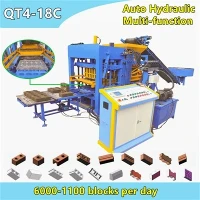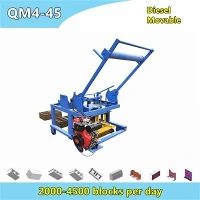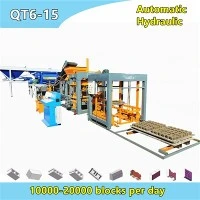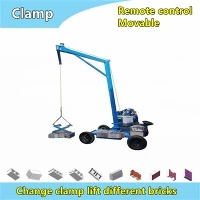


As demand for specialty paving materials continues to grow in construction, landscaping, and certain road projects, clay interlocking bricks are used in applications where a distinctive shape and interlocking structure are required. Compared with traditional manual production, a clay interlocking brick making machine uses a mechanized forming process to improve production efficiency and help manufacturers maintain more consistent brick dimensions.
The production process generally begins with raw material preparation. Clay is screened, crushed, and conditioned as necessary before being blended with other approved materials according to the product requirements. Moisture content is carefully controlled so that the prepared mixture has the consistency required for effective forming. Thorough mixing helps create a uniform material that can be processed consistently during the forming stage.
After preparation, the clay mixture is transferred to the machine hopper through a feeding or conveying system. The feeding mechanism then distributes the material evenly into the forming mold. Because interlocking bricks have a specific connection profile, the mold cavity must be designed according to the required dimensions, thickness, and interlocking geometry. Uniform feeding helps prevent areas of insufficient or excessive material and supports consistent forming.
Forming is the central stage of the production process. Once the material enters the mold, the pressing mechanism applies controlled force, causing the clay particles to compact and form a dense structure. Depending on the machine design, vibration or other auxiliary forming methods may also be used to improve material distribution inside the mold. Proper control of the pressing cycle helps produce bricks with clearly defined interlocking features and stable dimensions.
After pressing, the machine moves to the demolding stage. The mold and pressing head separate according to the programmed cycle, and the newly formed bricks are transferred to pallets or a conveying system. The green bricks then undergo natural drying or other appropriate post-forming treatment, depending on the material characteristics and product requirements.
The performance of a clay interlocking brick making machine depends not only on the equipment itself but also on clay particle size, moisture content, mold precision, and forming parameters. Manufacturers should therefore adjust the process according to product specifications and regularly inspect molds and other critical components.
Overall, a clay interlocking brick making machine typically completes production through raw material preparation, controlled feeding, mold pressing, demolding, transfer, and subsequent drying. With continued advances in automation and forming technology, this type of equipment can provide a more consistent and efficient mechanized solution for manufacturing specialty clay interlocking bricks.