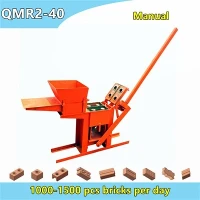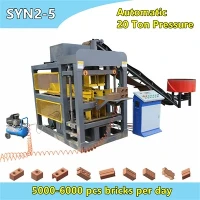


As construction and infrastructure development continue to expand, demand for concrete bricks, blocks, paving products, and other concrete materials is steadily increasing. Compared with manual production methods, concrete block making machines offer greater mechanization and automation, making them an increasingly important solution for modern concrete product manufacturing.
One of the main advantages of concrete block making machines is their ability to support efficient production. The equipment can perform material feeding, vibration, pressing, and demolding according to a programmed production cycle, reducing the impact of manual operations on production consistency. When integrated with concrete mixers, conveyors, pallet handling systems, and other supporting equipment, a block making machine can become part of a continuous production line.
Consistent product quality is another important benefit. Mechanized feeding and forming can reduce variations caused by manual handling and help maintain more uniform product dimensions and shapes. By carefully controlling the material mix, moisture content, vibration settings, and compaction process, manufacturers can achieve better density and more consistent product performance.
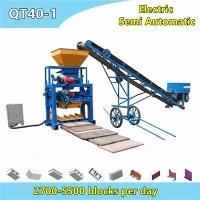
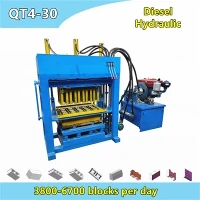
Concrete block making machines also provide considerable production flexibility. By changing the mold, the equipment can be adapted to manufacture solid concrete bricks, hollow blocks, paving blocks, kerbstones, and other concrete products. This flexibility is particularly useful for manufacturers serving different construction projects and market segments, as it allows them to adjust their product range without replacing the entire production system.
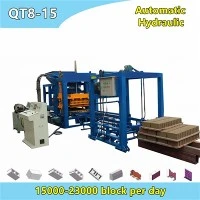
Automation is another major advantage of modern block making equipment. Some machines use PLC-based controls, touchscreen interfaces, and automated material handling systems to coordinate multiple stages of production. Reducing manual intervention can make operation more convenient and help minimize the influence of human factors on production stability.
From a production management perspective, concrete block making machines also support standardized manufacturing. Manufacturers can establish operating parameters for different products and combine them with appropriate material preparation and curing procedures to create a more consistent production process. This provides a useful foundation for quality control and process management.
Overall, concrete block making machines offer advantages including efficient production, consistent product dimensions, flexible product options, and increasing levels of automation. As construction machinery technology continues to advance, block making equipment is expected to become more efficient, energy-conscious, and intelligent, providing stronger support for the modern concrete product manufacturing industry.