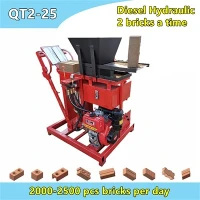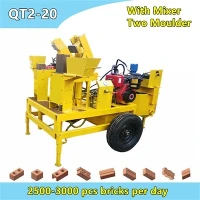


As demand for concrete bricks, blocks, paving products, and other concrete materials continues to grow, the structural design of concrete block making machines has become an important consideration for manufacturers. A well-designed machine structure contributes to stable operation, consistent forming performance, and easier maintenance. Modern concrete block making machines generally use a modular and mechanical design in which different components work together to complete the production process.
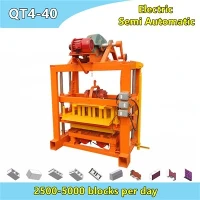
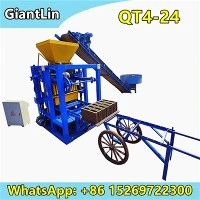
The main frame provides the structural foundation of the machine. It supports the forming unit, vibration system, and drive components and must withstand the continuous forces generated during vibration and compaction. A strong and rigid frame helps minimize structural movement during operation and provides a stable foundation for long-term production.
The forming system is one of the most important components of a block making machine. It typically includes the mold, pressing head, and associated movement mechanisms. Once the concrete mixture enters the mold, controlled vibration and pressure compact the material and shape it according to the mold configuration. Because mold dimensions directly determine the size and design of the finished product, different concrete products require appropriately designed molds.
The material feeding system transfers the prepared concrete mixture into the mold cavities and distributes it as evenly as possible. Proper material distribution helps reduce areas with insufficient or excessive material and creates more consistent conditions for the forming process. In automated machines, the feeding sequence can also be coordinated through the control system to maintain a stable production cycle.
The vibration system is another key structural component. Controlled vibration helps the concrete mixture rearrange within the mold and reduces internal voids, improving compaction. Depending on the machine design, different vibration mechanisms and operating parameters may be used to accommodate various concrete product requirements.
Hydraulic systems, mechanical drive components, and electrical controls form the machine's main power and control structure. Hydraulic systems can provide the force required for pressing operations, while the control system coordinates feeding, vibration, pressing, and demolding throughout the production cycle.
Overall, concrete block making machines feature an integrated structure in which the frame, forming unit, feeding system, vibration mechanism, power components, and control system work together. With continued advances in automation and intelligent control technology, machine structures are expected to become more stable, modular, and intelligent, providing manufacturers with increasingly reliable solutions for concrete product production.