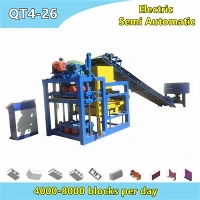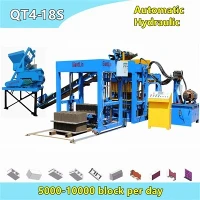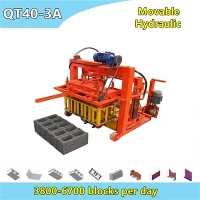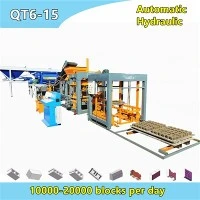


As demand for concrete bricks, blocks, paving products, and other concrete materials continues to grow, manufacturers have access to a wide range of concrete block making machines with different configurations, capacities, and automation levels. For building material companies, selecting equipment that matches their actual production requirements is essential for making effective use of their investment and maintaining reliable long-term operations.
The first step is to define the products and production requirements. Different machines are designed to accommodate different types of molds and concrete products. Manufacturers should determine whether they primarily intend to produce solid bricks, hollow blocks, paving blocks, kerbstones, or other products, and then select molds that match the required dimensions. Clearly defining the product range helps ensure that the machine configuration is suitable for the intended application.
Production capacity is another important consideration. Manufacturers should not select equipment based solely on its advertised output. Actual demand, working hours, available factory space, curing capacity, and supporting equipment should all be taken into account. A machine with insufficient capacity may struggle to meet production targets, while excessive capacity can result in unnecessary investment and underused equipment. Matching capacity to realistic production requirements is therefore more important than simply choosing the highest-output machine.
Forming stability should also be carefully evaluated. Concrete block making machines rely on controlled feeding, vibration, and compaction to form green blocks. The machine frame, vibration system, pressing mechanism, and mold accuracy can all affect the forming process. When evaluating equipment, manufacturers should pay attention to how consistently the machine forms products and whether it can maintain stable dimensions throughout repeated production cycles.
The level of automation is another key factor. Manufacturers operating large-scale production facilities may benefit from automated feeding, demolding, conveying, and palletizing systems, which can reduce manual handling and support continuous production. Smaller businesses or manufacturers that frequently change product types may prefer a more flexible configuration that is easier to operate and adapt.
Equipment quality, after-sales support, spare parts availability, installation services, commissioning, operator training, and maintenance support should also be considered. A concrete block making machine is a long-term production asset, so reliable technical assistance can play an important role in reducing downtime and maintaining stable operations.
Overall, choosing a concrete block making machine should involve more than comparing prices or individual specifications. Product requirements, production capacity, forming performance, automation, equipment quality, and service capabilities should all be evaluated together. Selecting a machine that fits the manufacturer's actual production conditions can help maximize equipment value and provide stronger support for stable, long-term concrete product manufacturing.