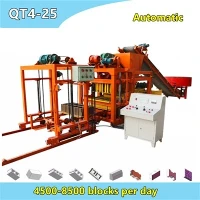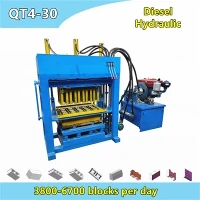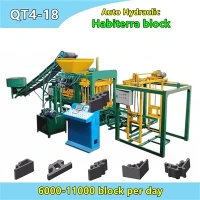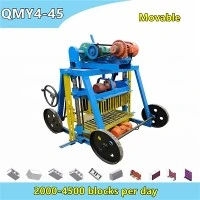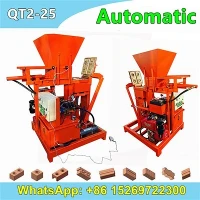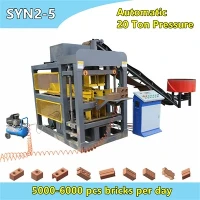


As the construction industry continues to demand efficient and reliable equipment for producing building materials, concrete block making machines have become widely used for manufacturing concrete blocks, masonry units, paving blocks, and other concrete products. Understanding how these machines work can help users select suitable equipment and operate production lines more effectively.
The production process begins with the preparation of raw materials. Cement, aggregates, fly ash, and other approved materials are proportioned according to the requirements of the finished product. A controlled amount of water is then added, and the materials are thoroughly mixed until they reach a uniform consistency suitable for molding. The prepared mixture is transferred to the machine hopper, where the feeding system distributes it evenly into the mold cavities.
Molding is the core stage of the concrete block making process. Once the material has entered the mold, vibration and compaction work together to consolidate the mixture. Vibration helps reduce trapped air and allows the concrete particles to rearrange and distribute more evenly throughout the mold. At the same time, the compaction system applies controlled pressure to form a dense and accurately shaped green block. In hydraulic block making machines, the hydraulic system controls the movement of the pressing head, helping maintain stable forming conditions and a consistent production cycle.
After compaction, the machine moves to the demolding stage. The mold and pressing head separate according to the programmed cycle, leaving the newly formed concrete blocks on production pallets. The green blocks are then transferred by a conveyor or stacking system to the curing area. During curing, cement continues to react with water through hydration, allowing the blocks to gradually develop the strength required for their intended application.
In general, a concrete block making machine completes production through material mixing, controlled feeding, vibration and compaction, demolding, transfer, and curing. Vibration settings, compaction performance, material proportions, and curing conditions can all affect the density, dimensional stability, and strength of the finished blocks. With continued advances in automation, hydraulic technology, and integrated production lines, modern concrete block making equipment is increasingly focused on higher productivity, reduced labor requirements, and more consistent manufacturing performance.